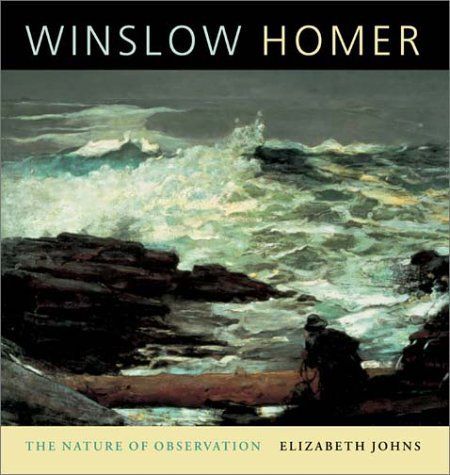
Winslow Homer: The Nature of Observation by Elizabeth Johns. 2002. Hardcover. (LF)
$12.00
In stock
Product Details
Unusual Size: Large Format
Binding: Hardcover
Year Published: 2002
"With its close analysis of both Homer's art and the personal challenges the artist faced during his life, Winslow The Nature of Observation is the most comprehensive study to date of the relation between Homer's work and the psychological stages of his life. Elizabeth Johns, using theories advanced by Erik Erikson and Daniel Levinson, looks at Homer's evolution as a painter and a person experiencing the developmental stages of young, middle, and late adulthood. She offers incisive and absorbing readings of his work at the turning points in his life." With this psychosocial approach, Johns relates the wood-engraved illustrations of Homer's early career to the values of his family; his images of the Civil War to the context of his young manhood; his paintings of the social scene and young women's place in it to his own potential for marriage; his images of fisherwomen at Cullercoats and fishermen at Prout's Neck to his interior vision during middle age; and his intrigue with the sea in his late works to his identification with the larger processes of the universe.
Save this product for later
Winslow Homer: The Nature of Observation by Elizabeth Johns. 2002. Hardcover. (LF)